
Health and Safety
Health Management
In its Code of Conduct, the Teijin Group states that we put the global environment, human safety and health as our top priorities when conducting business. Employees are regarded as key stakeholders, and the Group believes that sustainable corporate growth cannot be achieved without providing a safe and healthy working environment. In 2017, the Teijin Group announced the Teijin Group Health Management Declaration, expressing its commitment to actively promote the mental and physical well-being of its employees. Guided by the principle of respecting employee health, Group companies will continue to collaborate in advancing health management initiatives.
- *The Teijin Group was recognized as a Certified Health and Productivity Management Organization by the Ministry of Economy, Trade and Industry for its excellent health management. We have received this recognition for nine consecutive years.
The Teijin Group health management declaration
The Teijin Group believes that employees are the ultimate management resource.
We are committed to promoting the development of employees who are full of vigor and to the creation of vibrant workplaces for the sustainable growth of the company, and will continue to actively promote the mental and physical health of our employees.
At the same time, the Teijin Group strives to contribute to the health of people around the world through its business activities.
(Established on June 16, 2017)
Health Management Policy
The Teijin Group is strategically involved in the health management of its employees based on its Corporate Philosophy.
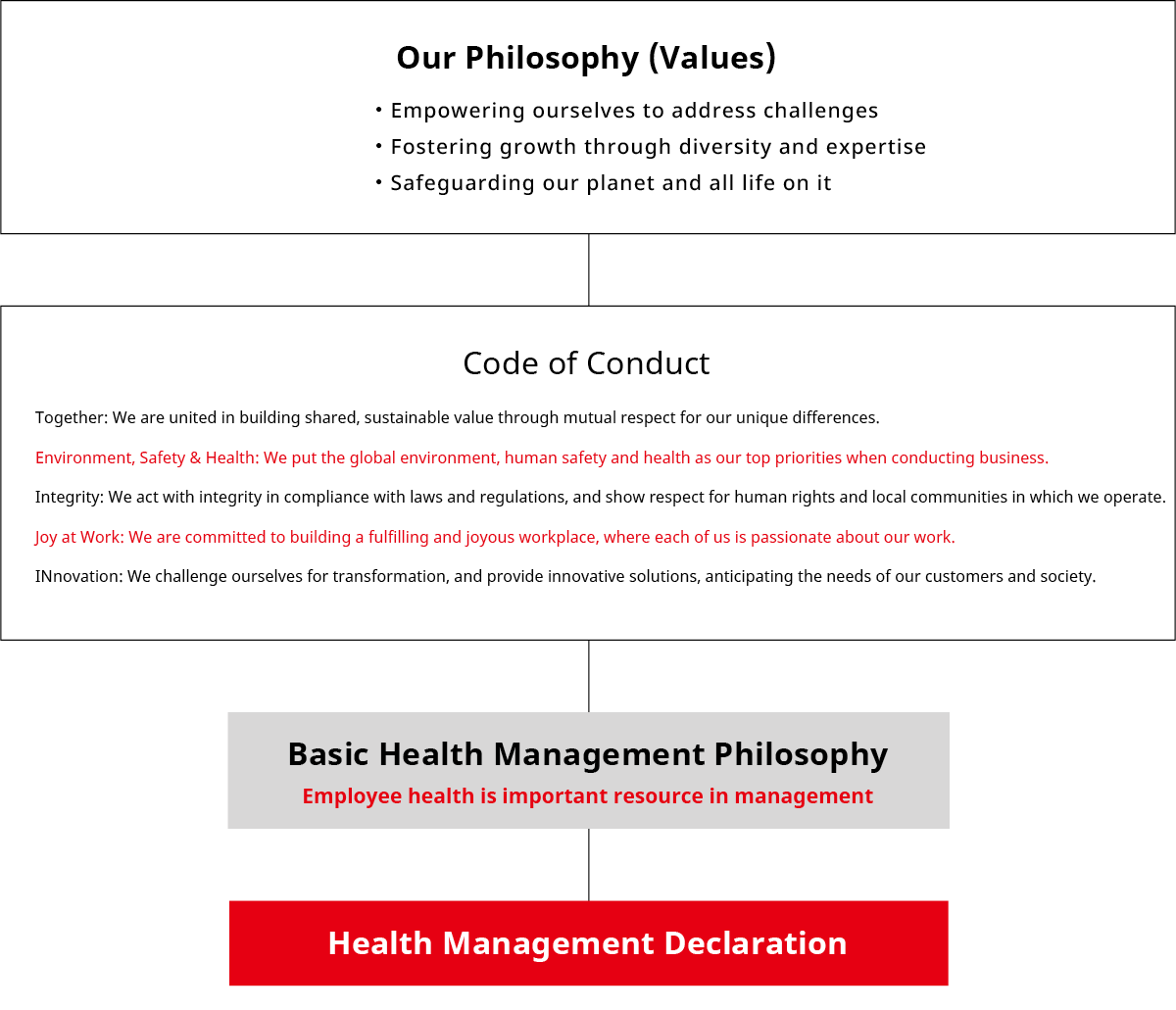
System for Promoting Health Management and Future Direction
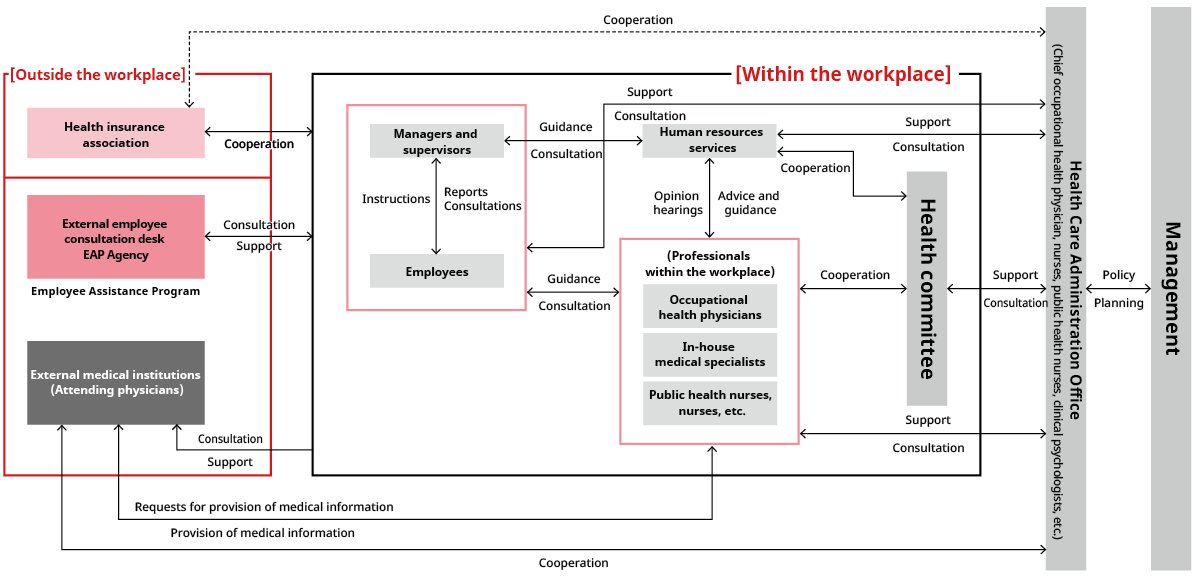
The Health Care Administration Office is positioned as a promotion department, and health management is promoted in cooperation with the Teijin Group Health Insurance Association, industrial physicians, and occupational health staff under the direction of top management.
Promotion System
Future Direction (medium-term issues)
By visualizing the results of the health management initiatives that we have been implementing to improve the well-being of our employees, we will enhance employee work engagement and foster a corporate culture that better facilitates innovation.
Comprehensive Mental Health Care Initiatives
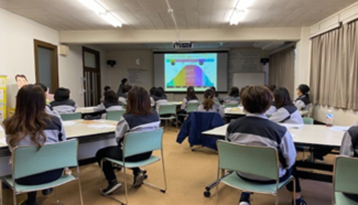
In regard to mental health, Teijin has established consultation services for employees both within and outside the Company and the Health Care Administration Office provides tailored mental support under the guidance of medical specialists. In FY2024, the number of consultations (including consultations conducted in-person, online, and via telephone calls) received from the staff at the Health Care Administration Office (clinical psychologists, public health nurses) and external EAPs (employee support programs) was 1,516. As we are also working to promote preventive education, the staff at the Health Care Administration Office is conducting new employee training, as well as regular self-care and line care training sessions. In total, we have implemented 30 preventive education sessions for approximately 1,200 employees. We also offer e-learning courses for topics such as training by employee level, self-care, and line care.
Implementation of a Diagnosis to Measure the "iki-iki" Level of Individuals and Workplaces
The Teijin Group has been diagnosing stress levels in all workplaces in Japan every year since 2003. Furthermore, in line with stress check legislation, in July 2016 it implemented the annual initiative of a diagnosis to measure the iki-iki (cheerfulness) level of individuals and workplaces. This diagnosis combines the workplace stress diagnosis with a stress diagnosis for individuals. Those workplaces assessed as exceeding a certain level were the focus of workplace improvement activities to achieve bottom-up improvement through discussions with employees in the field. The results of the June 2024 diagnosis (an effectiveness measurement) showed that these activities had led to improvements in approximately 80% of the workplaces concerned. Furthermore, from FY2019, we have been conducting "briefings on how to view the results of diagnosis to measure the iki-iki (cheerfulness) level of workplaces" targeting managers and encourage each department to improve the understanding of the results of group analysis and the methods of utilizing it, and are working on promoting activities to improve the workplace environment. Teijin will continue aiming to create cheerful and comfortable workplaces through these diagnosis and improvement activities.
Prevention and Health Promotion Measures for Health in Collaboration with Health Insurance Association
The Teijin Group is collaborating with health insurance association to implement a data-driven health plan (Collabo-Health) based on analysis of health data. Utilizing the data held on each employee by the company and the health insurance association, we are implementing targeted health programs categorized by risk, beginning with smoking cessation support. Our programs range from population-based approaches (initiatives for the entire workforce) to measures aimed at preventing the progression of lifestyle-related diseases.
ESH Management Activities
The Teijin Group positions Environment, Safety and disaster prevention, and Health (ESH) as key initiatives in all business activities and promotes ESH management across the entire group.
Goals and Basic Policies on ESH
In addition to compliance with the domestic and foreign relevant laws and municipal ordinances, we set forth our self-imposed goals for ESH management and its basic policies as follows.
Goals for ESH management
In accordance with the Teijin Group's ultimate goals -- the Challenge "ZERO," the goals for ESH management in business activities shall be the following four items:
- 1.Environmental conservation Zero environmental problems
- 2.Safety Zero labor accidents
- 3.Disaster prevention Zero explosions and fires
- 4.Health Zero occupational diseases
Teijin Group ESH Basic Policies
- 1.We make safety our highest priority, following our philosophy of protecting human life.
- 2.ESH is the responsibility of every production line manager.
- 3.ESH efforts are integral to every stage of business activities.
Group ESH Management System
The Teijin Group established the Group ESH Subcommittee to practice integrated environment, safety, and health (ESH) management. The Group ESH Subcommittee holds regular meetings twice a year to deliberate on policy, measures, and activities regarding ESH management, which are then expanded within the Group. The ESH Committee members appointed for each business unit serve as chairpersons of the ESH Committee and promote ESH management for each business. Additionally, the Teijin Group shall lay down criteria for the establishment of the ESH Management System (ESH-MS) at each factory and other facilities, as outlined in the "Standards for the Establishment of the Group's ESH Management System."
Objectives to establish the ESH Management System (ESH-MS)
- 1.Each factory and other facilities will secure their ESH management at a certain level and continuously improve their ESH performance by establishing and appropriately implementing the ESH-MS.
- 2.Through the establishment of the ESH-MS based on the international common standards such as ISO 14001 and ISO 45001, the Teijin Group will objectively show its stakeholders (shareholders, customers, business partners, regional society, and administrative organizations, etc.) that it maintains the level of its ESH management above the average.
- 3.Through the construction and operation of international common standards or ESH-MS based on those common standards, the Teijin Group will share the "common ideology and language of the ESH Management" among all factories, etc.
ESH assessments and audits
Through the ESH assessment system, Teijin reviews and verifies relevant laws and regulations, as well as ESH risks associated with project implementation and day-to-day operations. We strive to ensure legal compliance and take appropriate actions based on the level of risk. In accordance with the ESH Audit Regulations, we have established a dual-audit system consisting of ESH Audit A and ESH Audit B. Audit A is conducted annually by the Chairperson of the ESH Committee appointed for each business unit, while Audit B is carried out by the general manager of the Environment and Safety Department, who is appointed by the Chief Production, Engineering & Procurement Officer. During the audit process, each business unit reports on the status of ESH management, incidents and accidents, countermeasures taken, and overall ESH activities. These reports are then reviewed, and guidance is provided regarding future challenges and actions to be taken before the next audit.
| Overview of Audits | Auditors | FY2024 Audit Results | |
|---|---|---|---|
| ESH Audit A | ESH audits at production sites | Chairperson of business unit ESH committee | 23 sites (13 in Japan and 10 overseas) |
| ESH Audit B | Audit of business unit audit results | General manager of the Environment and Safety Department | 15 cases (2 composites factories, 8 business units, 5 directly managed companies) |
Training for internal auditors of ESH compliance
To enhance compliance with laws and regulations related to ESH, every year we hold a course to train Group employees as internal auditors for ESH compliance. In FY2024, 88 employees were newly certified as Grade 1 internal auditors for ESH compliance and 29 employees were certified as Grade 2 internal auditors for ESH compliance.
Responding to an ESH accident
To ensure that all ESH-related accidents, including occupational accidents and work-related illnesses, are promptly investigated and reported within the Group according to the details of the accident, we have established and strictly enforce the "ESH-related accident/disaster occurrence reporting rules"
Prioritization and Action Plans in FY2025
In FY2025, we will address the following priority issues with the aim of achieving zero ESH accidents in our business activities.
- 1.Further reduce occupational accidents and disaster prevention incidents, and eliminate serious accidents.
- 2.Suppression of work and behavior-related accidents.
- 3.Review and promotion of disaster prevention management.
- 4.Compliance with environmental regulations and strengthening of chemical substance management.
Security and Disaster Prevention Activities
Framework for Promoting Disaster Prevention Management
The Teijin Group is engaged in disaster prevention management and has established Groupwide disaster prevention guidelines. For each fiscal year, we design plans based on these guidelines relating to preventative measures, such as disaster prevention assessment, fire prevention, and earthquake countermeasures, as well as planning and implementing initiatives including the strengthening of disaster prevention training and drills and upgrading of fire prevention equipment. Each business unit/manufacturing site manages the implementation status and achievements of these disaster prevention activities and gives guidance to improve any areas of noncompliance. The results of this are then audited by the Chief Production, Engineering & Procurement Officer at the end of each fiscal year.
Implementing Disaster Prevention Diagnoses
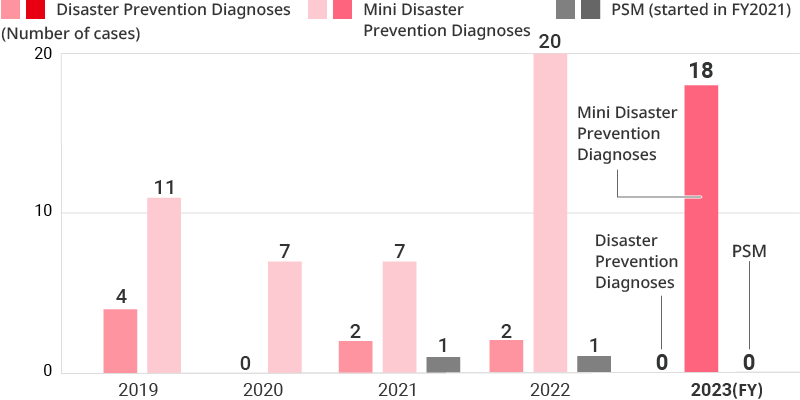
The Teijin Group has been conducting disaster prevention diagnoses since 1980 and mini disaster prevention diagnoses since 2008 in line with its own independent standards. In Teijin's aramid business, process safety management (PSM) has been introduced at Teijin Aramid B.V. affiliated chemical plants in the Netherlands, Japan, and Asia. Disaster prevention diagnoses and PSM are used to assess safety every five years by experts in manufacturing, facilities, and ESH at a total of 15 plants globally. These are Teijin Group plants where large amounts of hazardous substances are handled. Mini disaster prevention diagnoses mainly examine fire prevention, focusing on small-scale locations with a risk of fires, such as boilers and places where hazardous materials and combustibles are stored (25 factories). We conduct an examination every five years. In FY2024, we carried out diagnoses at 14 risk areas in 12 factories.
Trends in the number of disaster prevention diagnoses
Other Activities Aimed at Realizing Zero Serious Accidents
To achieve our aim of realizing zero "serious accidents," which we have defined as including explosions, fires, and external leakage/spills of hazardous substances, we are taking various measures to reinforce disaster prevention including disaster prevention diagnoses, training, and drills at our chemical plants and power plants.
Trends in the number of serious accidents
We are continuously taking various measures to reinforce disaster prevention, including disaster prevention diagnoses, training, and drills.
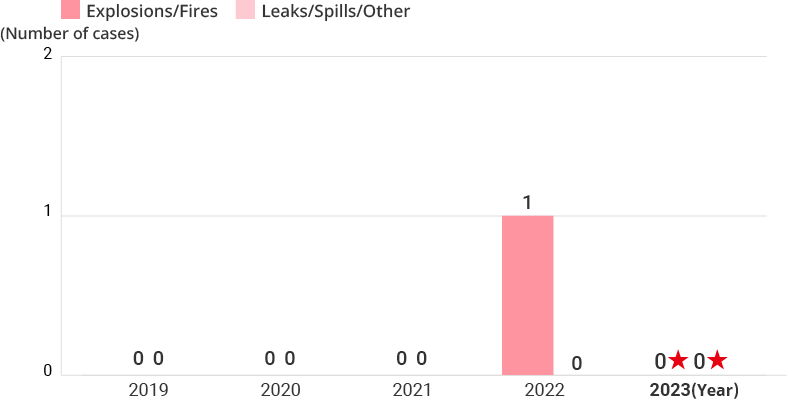
- *A serious accident refers to explosions or fire accidents, accidents involving leakage or outflow of hazardous materials or hazardous substances, which have caused human damage (lost-time injury accidents), or have affected the local community, or have involved full-scale external support.
- *Figures are calculated based on calendar years
Fire Prevention Activities
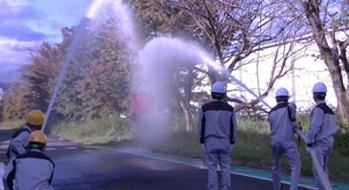
Since 2008, November 10 has been the Teijin Group Fire Prevention Day. On this day, each Group company conducts its own fire prevention activities, as well as common activities for the whole Teijin Group, such as periodical fire prevention checks. These activities are shared Groupwide in order to strengthen the fire prevention system.
Disaster Prevention Training (Evacuation Drills)
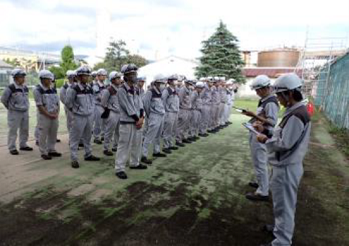
Since the Great East Japan Earthquake struck on March 11, 2011, the Teijin Group has continued to implement evacuation drills assuming the occurrence of a natural disaster. After the drills, we hold review meetings and endeavor to improve our antiearthquake manual. Training was carried out at plants and facilities in Japan in FY2024 as well (including tabletop exercises).
Occupational Safety Activities
Occupational safety promotion system
To reduce risk in the workplace, the Teijin Group encourages its manufacturing and processing sites to obtain occupational health and safety management system certification (ISO 45001 and integrated management systems including its requirements). As of the end of March 2025, a total of 40 business sites and plants have acquired the occupational health and safety management system certification.
Current status of occupational health and safety management system certification
Japan (12 companies, 18 factories)
| Teijin | Iwakuni, Matsuyama, Mishima, Ibigawa, Mihara | Teijin Frontier | Matsuyama, Ibigawa |
| Unisel | Iwakuni |
| Teijin Tedy | Matsuyama |
| Hiroshima Plastic | Hiroshima |
| Teijin Eco-Science | Matsuyama |
| Teijin Pharma | Iwakuni |
| Teijin Kosan | Ehime | Toho Chemical Engineering & Construction | Mishima, Tokushima |
| Toho Machinery | Tokushima |
| Teijin Regenet | Iwakuni |
| Teijin Medical Technologies | Iwakuni |
Overseas (16 companies, 22 factories)
| The Netherlands | Teijin Aramid | Delfzijl、Arnhem、Emmen |
|---|---|---|
| China | Teijin Chemicals Plastic Compounds (Shanghai) | Shanghai |
| Teijin Polycarbonate China | Zhejiang | |
| Nantong Teijin* | Nantong | |
| N.I. Teijin Airbag Fabric*(Nantong) | Nantong | |
| Teijin Automotive Fabrics Finishing*(Nantong) | Nantong | |
| Teijin Product Development China* | Nantong | |
| Thailand | Teijin Corporation (Thailand) | Ayutthaya |
| Thai Namsiri Intertex | Weaving:Chacheongsao、Dyeing:Samutprakarn | |
| Teijin (Thailand) | Ayutthaya | |
| Teijin Polyester (Thailand) | Pathumthani | |
| Teijin Cord (Thailand) | Ayutthaya | |
| Germany | Teijin Carbon Europe | Heinsberg |
| Spain | Esteve Teijin Healthcare S.L. | Castelldefels |
| Portugal | Teijin Automotive Technologies Portugal | Leça do Balio、Palmela |
| Czech Republic | Teijin Automotive Technologies Czech | Čejetice、Čejetičky、Milovice |
- *Sites certified under integrated management systems incorporating ISO 45001 requirements
Occupational Safety Promotion Activities
Promoting the three pillars of safety activities
In order to prevent occupational accidents, the Teijin Group has established three pillars of safety activities: the "5S" initiative (referring to the five Japanese words seiri, seiton, seiso, seiketsu, and shitsuke, which correspond to organization, tidiness, cleaning, hygiene, and discipline); the "Hiyari" or "Hatto" (meaning close call or near miss) initiative; and safety patrols. These activities from Japan are expanded as activities common to the Teijin Group including overseas Group companies. Utilizing the information obtained through these activities, we aim to enhance individual awareness of risks and communication in the workplace in order to eliminate occupational accidents within the Teijin Group.
In addition, we hold monthly safety and health committee meetings at each location, bringing together worker representatives, company representatives, and industrial physicians as a forum for sharing information and holding discussions. Furthermore, we share information and hold discussions through our own activities, such as the ESH Promotion Committee, to ensure workplace safety and to raise the level of our safety activities.
Initiatives aimed at preventing lost-time injuries
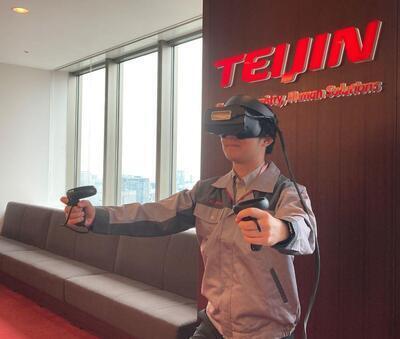
In FY2024, to reduce the occurrence of accidents caused by specific tasks or actions, we advanced initiatives, such as measures to improve hazard recognition and risk sensitivity using VR technology, as well as efforts to raise the awareness of behaviors that are considered safe based on BBS (Behavior Based Safety). In FY2025, to curb accidents caused by falls or becoming trapped in or between objects, which have been the primary causes of lost-time injuries to date, we are promoting safety activities that focus on these risks. We also have a system in place to receive reports on lost-time and no-lost-time injuries involving contractors that occur within the Teijin Group to support and promote the safety initiatives of our contractors.
Groupwide sharing of occupational accident information and response measures
Information on all occupational accidents involving lost time injuries within the Teijin Group is shared via the intranet to help prevent recurrence of similar incidents. In particular, if the circumstances and cause of the accident satisfy the requirements for a special audit as described in the ESH Audit Regulations, a special audit is performed either by the head office or the relevant business unit, depending on the details of the accident. Special audits check the status of on-site investigations to determine the cause of the accidents, the progress of recurrence prevention measures, and whether or not there are any points for improvement.
Status of Occupational Accidents
In 2024 (January-December), there were no occupational accidents resulting in the death of an employee or contractor employee. (There have been no occupational accidents resulting in the death of an employee, including contractor employees, over the past seven years). The all occupational accident frequency rate (excluding TAT North America) was 0.97 (0.89 in Japan), which has allowed us to achieve our target of 1.0 or less.
Lost-time injury frequency rate and all occupational accident frequency rate
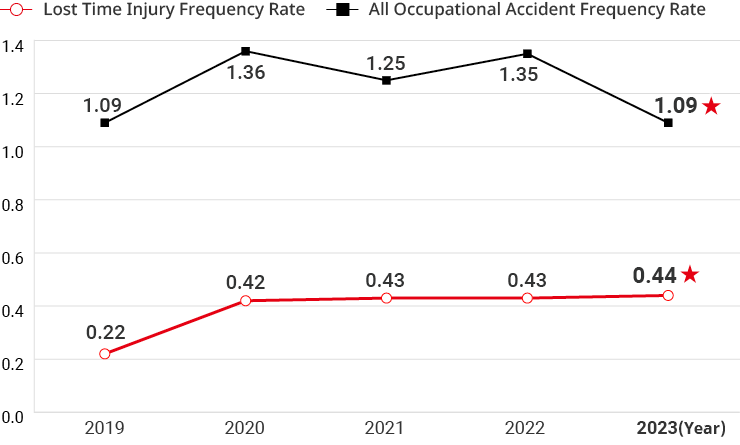
- *Teijin Automotive Technologies NA Holdings Corp. (hereinafter, "TAT-NA"), a consolidated subsidiary in the materials segment that operates the automotive composites business in North America, has been excluded from the scope of aggregation from FY2024 due to it being a discontinued operation. Past figures include TAT-NA, while figures for FY2024 exclude TAT-NA. The figures in parentheses are reference values that include TAT-NA and are not subject to third-party assurance.
- *Lost-time injury frequency rate indicates the number of lost-time injured persons per one million working hours (figures are calculated based on calendar years).
- *All occupational accident frequency rate indicates both lost-time injured persons and non-lost-time injured persons per one million working hours (figures are calculated based on calendar years). Includes full-time employees, fixed-term employees, part-time employees, and temporary employees. This rate has been assured independently since 2022.