
Materiality and KPIs
The Teijin Group has assessed impacts on itself and its stakeholders and identified five key issues (materiality) to prioritize. By helping solve key social issues through our business activities, we strive to create both social and economic value. At the same time, we will tackle key management issues to strengthen the management system that supports the creation of such value. By focusing on these key issues, we will promote the Teijin Group's sustainability management and enhance our corporate value over the medium- and long-term.
Key Social Issues
Key Issue 1 "Climate Change Mitigation and Adaptation"

We will work with customers and partners toward achieving a net-zero society through improvement in energy efficiency and electrification. We will also expand solutions to support society's resilience against increasingly severe natural disasters and heat stress. We will not only work to reduce GHG emissions within our group, but also promote visualization of products' environmental impact and, by providing lightweighting and efficiency solutions, contribute to reducing GHG emissions across the entire supply chain.
| Example Solutions | Lightweighting and electrification materials for mobility, materials for renewable energy infrastructure, heat mitigation solutions, disaster prevention products, etc.

|
|---|---|
| KPIs |
|
Key Issue 2 "Achievement of a Circular Economy"

With the aim of breaking away from a disposable linear economy, we will work with our partners to transform resource circulation throughout our value chain and reduce environmental impact by utilizing resource circulation and digital technology. We work to reduce, reuse, and recycle raw materials, water resources, and other resources, and strive for efficient utilization.
| Example Solutions |
Materials and products using recycled raw materials and plant-derived raw materials, highly durable materials, chemical recycling technology, establishment of circular ecosystems, etc.

|
|---|---|
| KPIs |
|
Key Issue 3 "Safety and Security of People and Local Communities"
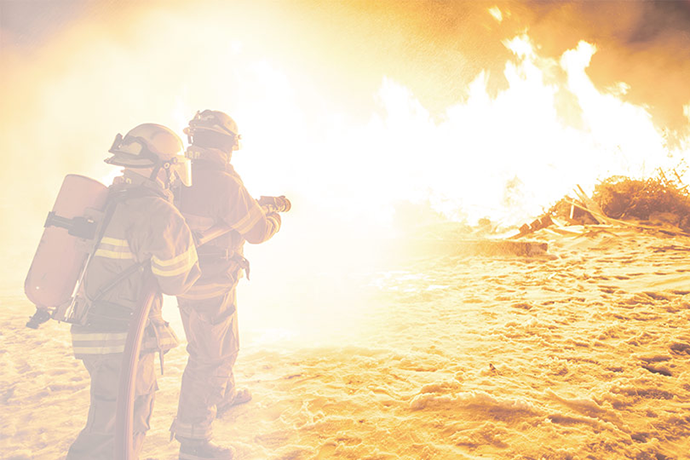
We address the safety and security needs of our customers and partners, providing protection, disaster prevention, and disaster mitigation solutions. We also contribute to preventing environmental pollution and conserving ecosystems to protect the global environment. We work on safety and disaster-prevention activities to address the risks of fire and accidents, and we strive for proper management and efficient use of hazardous chemicals that pose a risk of ecosystem destruction and environmental pollution.
| Example Solutions |
Life protection technologies (protective clothing, airbag base fabric, etc.), high-performance hazardous substance removal materials and products, etc.
|
|---|---|
| KPIs |
Key Issue 4 "Realization of Healthy and Comfortable Living for People"

To meet increasingly diverse medical needs, we collaborate with stakeholders involved in healthcare and nursing care to help provide the healthcare people want in the places they feel most at home. Furthermore, to enhance the well-being of a wide range of people and contribute to a richer life, we offer solutions that improve comfort in clothing, living spaces, and transportation. We will also provide a comfortable work environment while addressing long working hours, and work to improve mental health.
| Example Solutions |
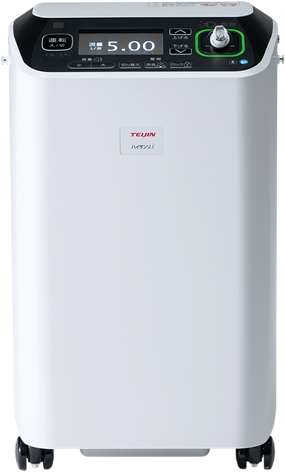
Medical devices, pharmaceuticals, regenerative medicine products, medical services, medical support using ICT, functional clothing, personal mobility components, etc.
|
|---|---|
| KPIs |
|
Key Management Issues
Key Issue 5 "Further Strengthening of Our Sustainable Management System"

We will establish an organizational structure that flexibly responds to changes in the external environment, thereby accelerate the shift to a customer-centric business model and support our sustainable growth as well as the value we deliver to our customers and society. We will focus on initiatives such as "improving production and manufacturing technologies" and "accelerating innovation creation" to quickly respond to customer and societal demands, "human capital management" to leverage diverse strengths, and "digital transformation" to drive business transformation.
| KPIs |
|
|---|
Materiality Identification Process
The Teijin Group grasps and organizes a wide range of social issues, and analyzes and extracts key ones from the perspective of their importance to the Teijin Group and their impact on stakeholders. After the Chief Sustainability Officer engages in dialogue with external experts, the Teijin Group's materiality is ultimately identified at a Management Committee. We reaffirmed during the formulation of our new medium-term management plan that these key issues will continue to be priorities as we advance portfolio transformation.
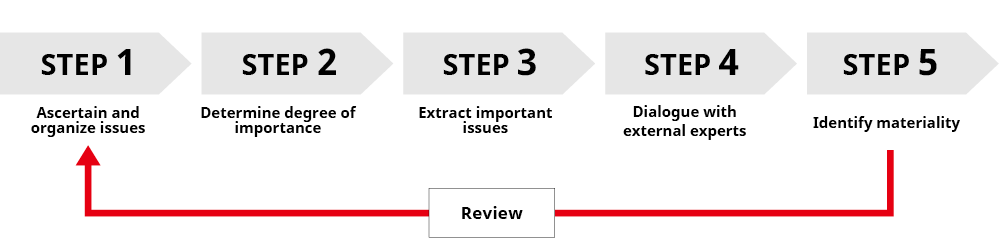
STEP1 Grasp and organize issues
Grasp and organize a wide range of trending issues in society, starting with the SDGs
STEP2 Determine degree of importance
Determine the degree of importance to the Teijin Group based on both the degree of impact on the business (considering both positive and negative aspects) and the likelihood/probability of occurrence
STEP3 Extract key issues
From the group of issues analyzed in STEP 2, extract those with a particularly high degree of importance to the Teijin Group and a high impact on stakeholders as key issues
STEP4 Dialogue with external experts
Engage in dialogue with external experts about the Teijin Group's materiality identification process and the extracted issues
STEP5 Identify materiality
Deliberate and confirm at a Management Committee to identify "The Teijin Group's Materiality"
KPIs
The KPI targets and results for FY2025 are as follows.
| Key Issues | KPIs | Targets | FY2025 Actual |
|---|---|---|---|
| Climate change mitigation and adaptation | Avoided emissions | FY2030 Total GHG emissions < Avoided emissions |
3.24 million tons-CO2e (Total GHG emissions:4.48) |
| Group GHG emissions (Scope 1 + 2) |
30% reduction by FY2030* Net zero by FY2050 |
28% reduction* | |
| Supply chain GHG emissions (Scope 3, Category 1) | 15% reduction by FY2030* | 12% reduction* | |
| Sales ratio of products with calculated carbon footprints | FY2030 Expansion to 70% | - | |
| Achievement of a circular economy | Freshwater intake volume per sales unit | 30% improvement by FY2030* | 24% improvement* |
| Establish internal management targets for expanding the provision of solutions that contribute to the circular economy | |||
| Safety and security of people and local communities | Hazardous chemical substance emissions per sales unit | 20% improvement by FY2030* | 45% improvement* |
| Total occupational accident frequency rate | Maintain below 1.0 | 1.14 | |
| Realization of healthy and comfortable living for people | Establish internal management targets for the number of people supported to receive care in a familiar location | ||
| Further strengthening of our sustainable management system | Employee engagement score | April,2030 Score of 68 |
64 |
| Diversity-related ratios | April,2030 Ratio of female executives 30% Ratio of Non-Japanese executives 30% Ratio of female department and section managers 20% |
22% 4% 10% |
|
| Business model transformation indicators | FY2026 8 or more co-creation projects |
- | |
- *Target and actual values based on FY2018 as the base year