
Pollution
Metrics and Targets
The Group's target (KPI)
FY2030: 20% improvement in hazardous chemical substance emissions per sales unit (compared to FY2018)
We are working to reduce hazardous chemical substance emissions through ongoing efforts to prevent leaks and transition to processes that create fewer emissions. In FY2025, due to those efforts in the carbon fibers and resin and plastic processing businesses, our hazardous chemical substance emissions were 426 tons, and emissions per sales unit was 51.5kg/100 million yen.
Trends in hazardous chemical substance emissions and emissions per sales unit
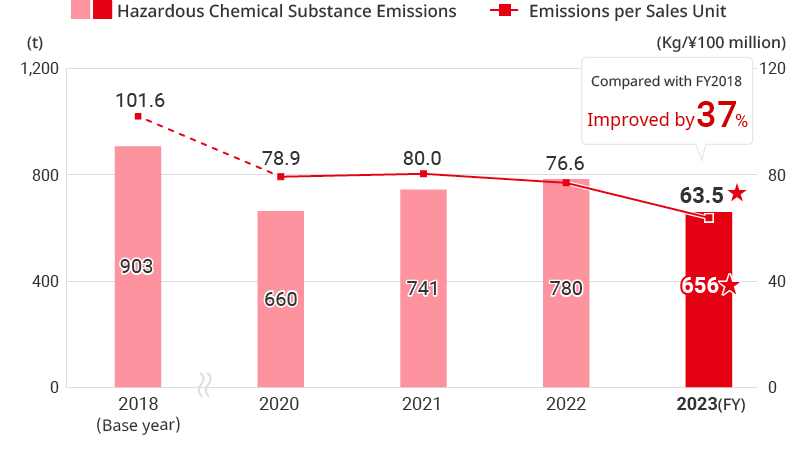
- *Teijin Automotive Technologies NA Holdings Corp. (TAT-NA), which had been a consolidated subsidiary of the Materials Segment, was divested in July 2025 following the share transfer agreement concluded in March 2025. TAT-NA is included from FY2021 to FY2023 and excluded from both the base year and FY2024 onward.
- *Per sales units are calculated using consolidated net sales as the denominator. Note that from FY2024, the denominator in the calculation is the amount obtained after deducting the net sales of companies outside the boundary from the consolidated net sales.
- *Among the Class 1 designated chemical substances under the Act on Confirmation, etc. of Release Amounts of Specific Chemical Substances in the Environment and Promotion of Improvements to the Management Thereof (hereinafter, the "PRTR Act") and chemical substances indicated by the Japan Chemical Industry Association, chemical substances emissions to atmosphere, water, and soil which are harmful to aquatic environments and the ozone layer in the Globally Harmonized System of Classification and Labelling of Chemicals (GHS) classification defined by the United Nations (UN) are subject to the calculation for emissions.
Impact on Atmosphere
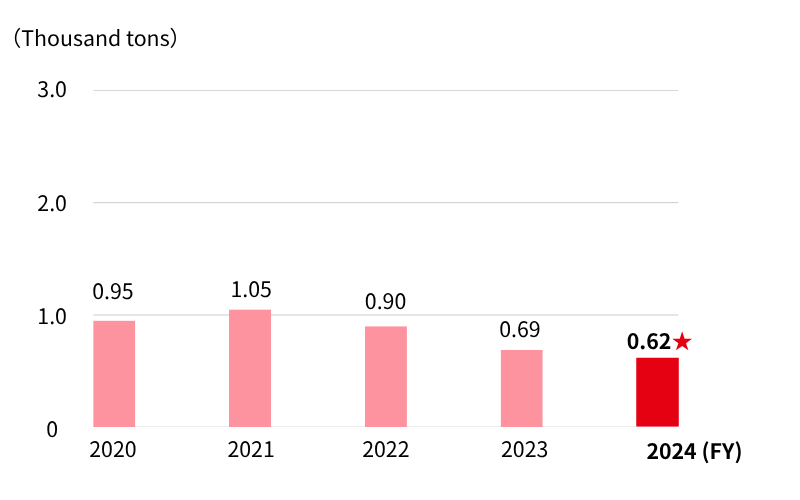
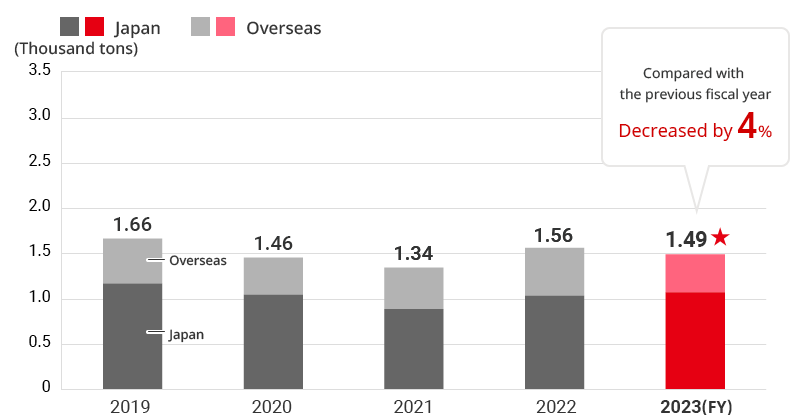
NOx emissions resulting from fuel use were 0.60 thousand tons. SOx emissions were 1.51 thousand tons. VOC emissions were 1.09 thousand tons.
Trends in NOx emissions
Trends in SOx emissions
Trends in VOC emissions
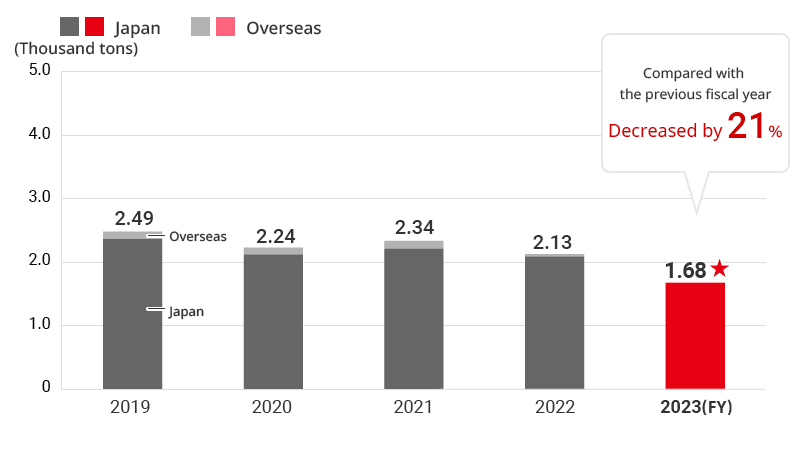
- *Teijin Automotive Technologies NA Holdings Corp. (TAT-NA), which had been a consolidated subsidiary of the Materials Segment, was divested in July 2025 following the share transfer agreement concluded in March 2025. TAT-NA is included from FY2021 to FY2023 and excluded from both the base year and FY2024 onward.
Initiatives
In addition to conforming to each country's and territory's legislation relating to the prevention of soil pollution, the Teijin Group formulated guidelines for preventing soil and groundwater pollution. Under these guidelines, we are striving to prevent soil and groundwater pollution resulting from our business operations.