
Resource Recycling
Toward Realizing a Circular Economy
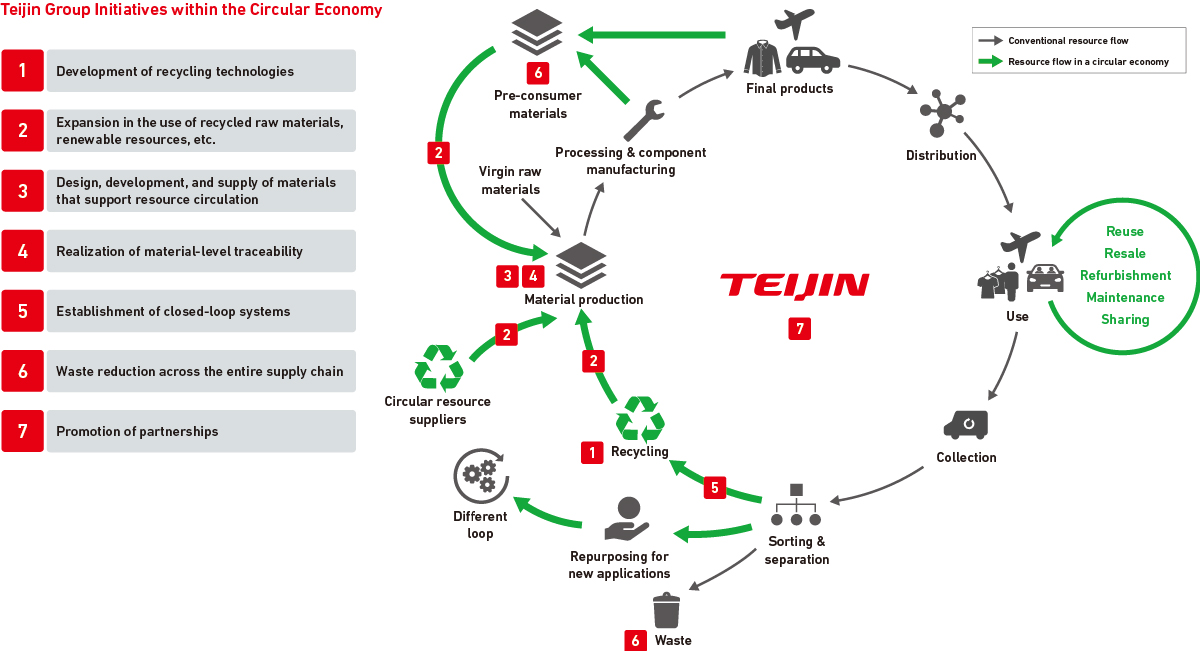
The Teijin Group is promoting initiatives for the achievement of a circular economy, a global social issue. Achieving a circular economy requires making effective utilization of resources for as long as possible. It is necessary to reduce environmental impact by circulating resources efficiently while maintaining their value and to minimize waste and hazardous substance emissions throughout the entire life cycle of products and services. Working with a broad network of partners, the Teijin Group promotes initiatives such as the seven listed below across different stages of the value chain.
Providing Solutions Starting from Customer Issues
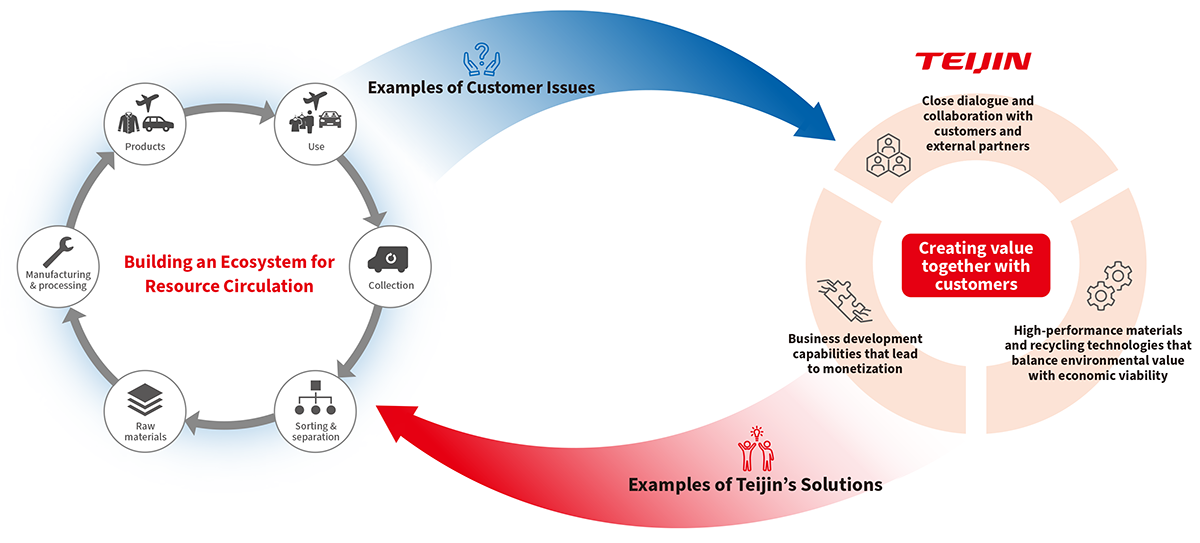
Various customer issues exist throughout the value chain. Starting from these issues, the Teijin Group contributes to building an ecosystem for resource circulation by providing a broad range of solutions through collaboration with diverse partners while leveraging its own strengths.
Examples of Customer Issues
- Differentiation and enhanced market competitiveness through environmental value proposition
- Responding to increasingly stringent environmental regulations
- Overcoming technical barriers and building circular systems
- Data sharing and resource-efficient, easy-to-recycle design across the entire value chain
Aramid Fiber Circular Production Process
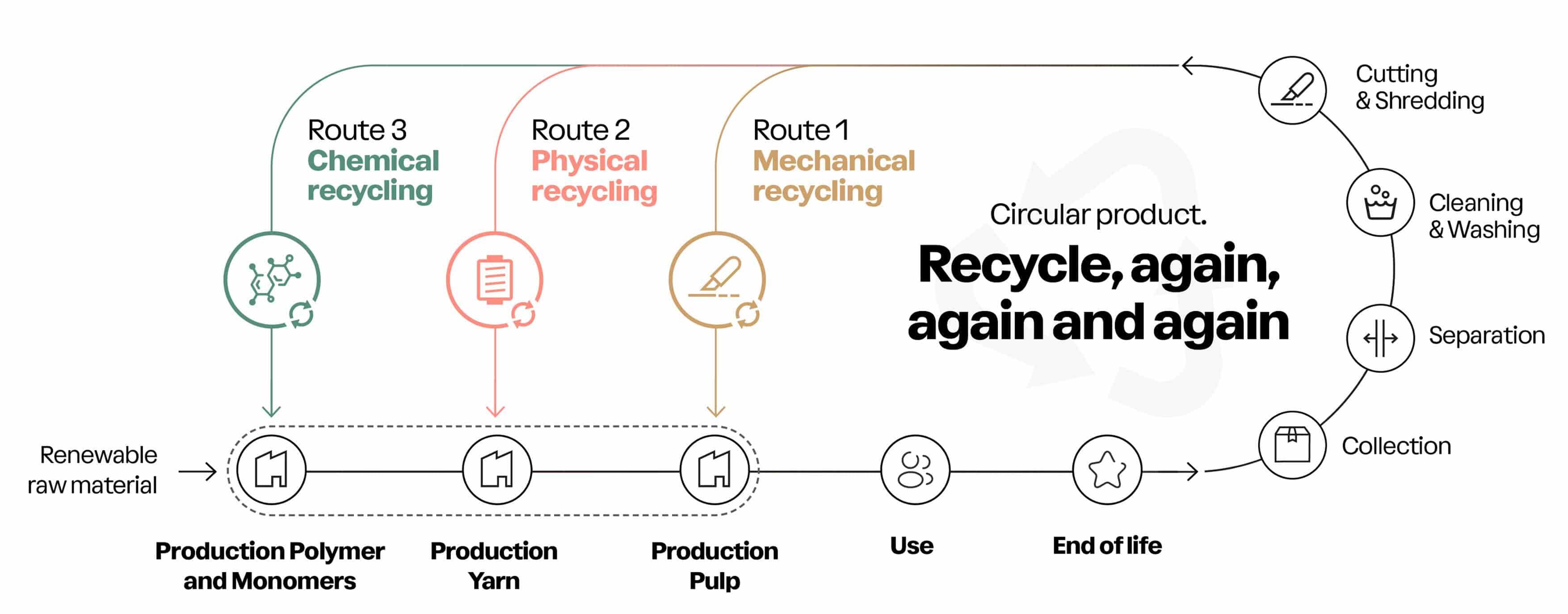
Teijin Aramid B.V. is working toward a circular economy. For more than 20 years, Teijin Aramid has had a successful record of mechanically recycling end-of-life products to Twaron pulp. Teijin Aramid plans to gradually move forward with the circular production process using various innovative technologies and sources of pre- and post-consumer waste. Teijin Aramid has been making progress on developing a physical recycling technology for fiber-to-fiber recycling. The first industrial-scale production run was achieved in April 2023, followed by a second run in April 2024. Teijin Aramid is also working on the development of chemical recycling technology for aramid fibers; this is a longer-term development. Next to the recycling technologies, Teijin Aramid is working on procuring sustainable raw materials from its suppliers. Teijin will comply with future regulations while meeting customer demands.
Release of DPP proof-of-concept Compliant with Europe's ESPR
In November 2024, we invested in Circularise B.V., a Dutch IT company, to advance the development of products compliant with the EU Ecodesign for Sustainable Products Regulation (ESPR). Using Circularise's system, we conducted proof-of-concept trials with selected aramid and carbon fiber products to demonstrate their compatibility with the Digital Product Passport (DPP)*.
- *Digital Product Passport (DPP): a digital certificate that comprehensively records when, where, and with what materials a product is manufactured, used, and disposed of throughout its lifecycle.
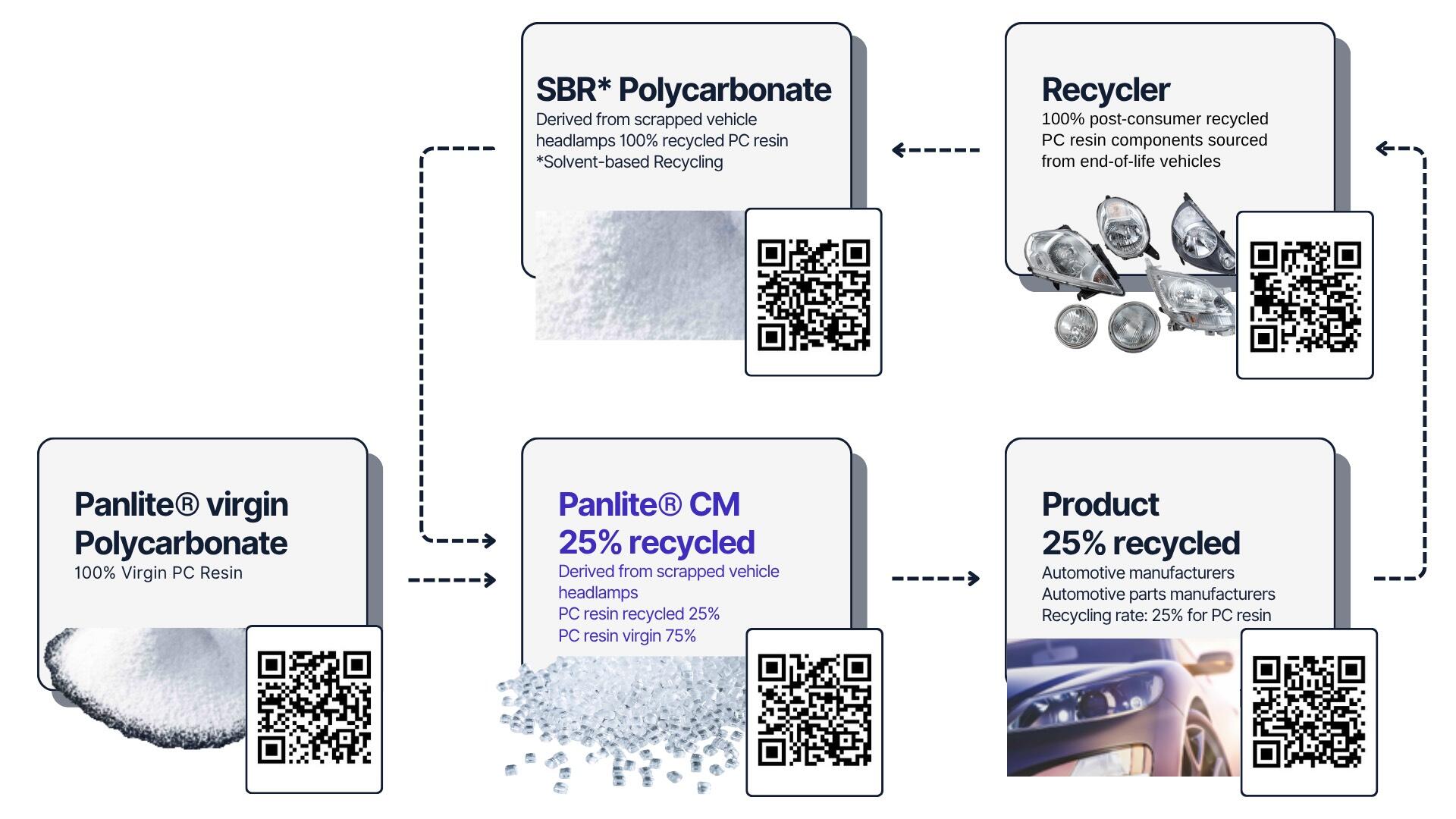
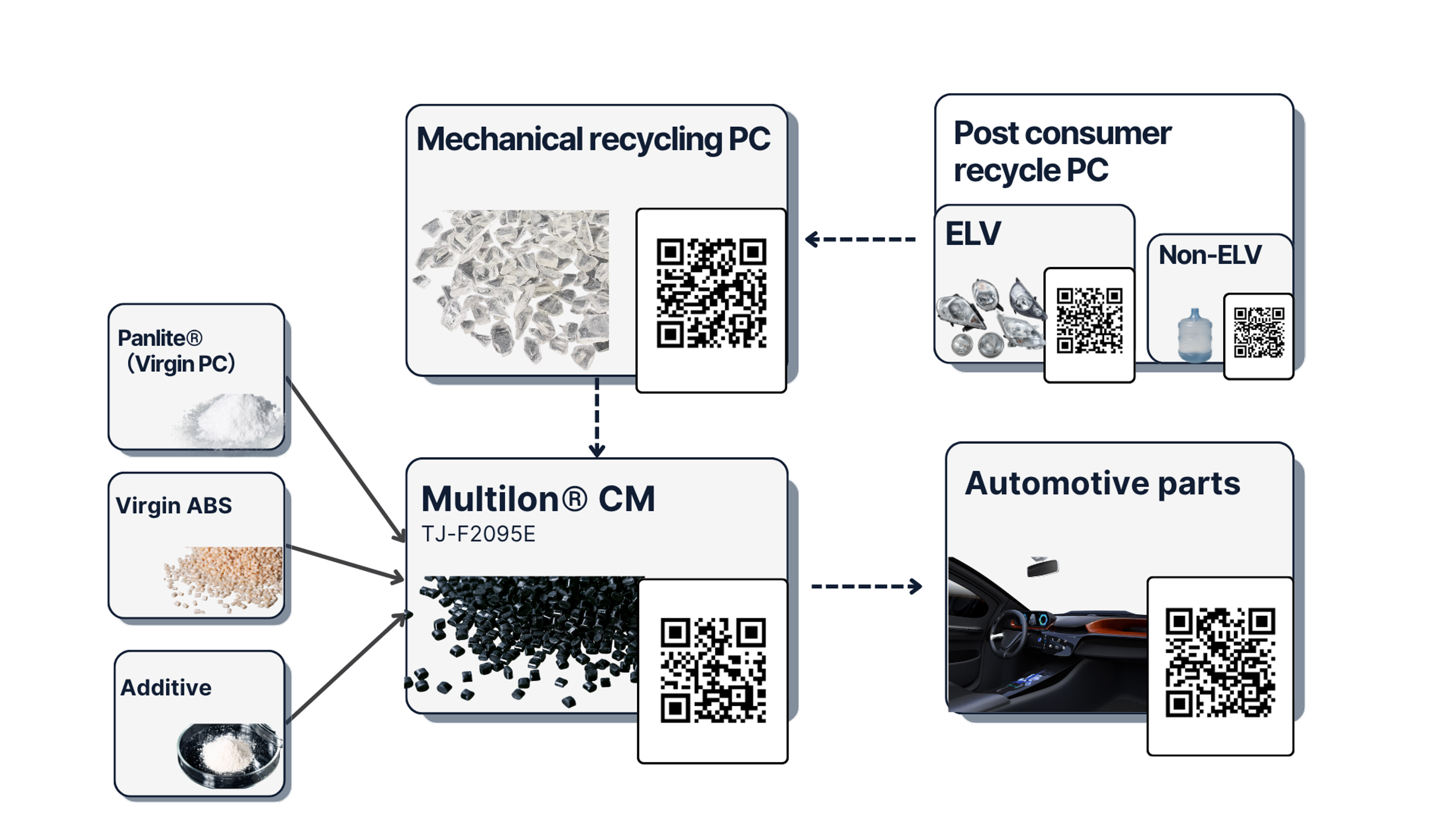
In FY2025, we also conducted a demonstration project for a digital product passport (DPP) covering Panlite® CM and Multilon® CM, recycled polycarbonate resins derived from end-of-life vehicles. In this project, we visualized information on raw material origins, recycled content, and traceability across the entire supply chain, while enabling reliable data sharing that protects the confidentiality of information. Through this project, we demonstrated the effectiveness of a mechanism for establishing a foundation for compliance with the ELV Regulation and other future regulations, and for verifying the value of circular materials.
For more information on our eco-friendly polycarbonate (PC) resin products, Circular Materials (CM), please see the following page.
Metrics and Targets
In FY2025, our landfill waste volume was 3.2 thousand tons, and the volume per sales unit was 0.39 tons/100 million yen.
Trends in landfill waste volume and volume per sales unit
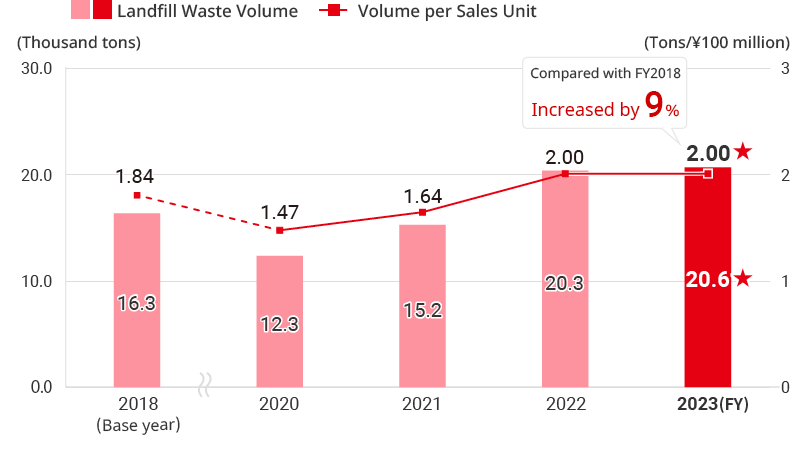
- *Teijin Automotive Technologies NA Holdings Corp. (TAT-NA), which had been a consolidated subsidiary of the Materials Segment, was divested in July 2025 following the share transfer agreement concluded in March 2025. TAT-NA is included from FY2021 to FY2023 and excluded from both the base year and FY2024 onward.
- *Landfill waste volume is calculated based on the amount of waste disposed of directly in landfills.
- *Landfill waste volume has significantly decreased from FY2024 onward, as TAT-NA--which had accounted for a large share of emissions prior to its divestment--has been excluded from the reporting scope.
- *Per sales units are calculated using consolidated net sales as the denominator. Note that from FY2024, the denominator in the calculation is the amount obtained after deducting the net sales of companies outside the boundary from the consolidated net sales.